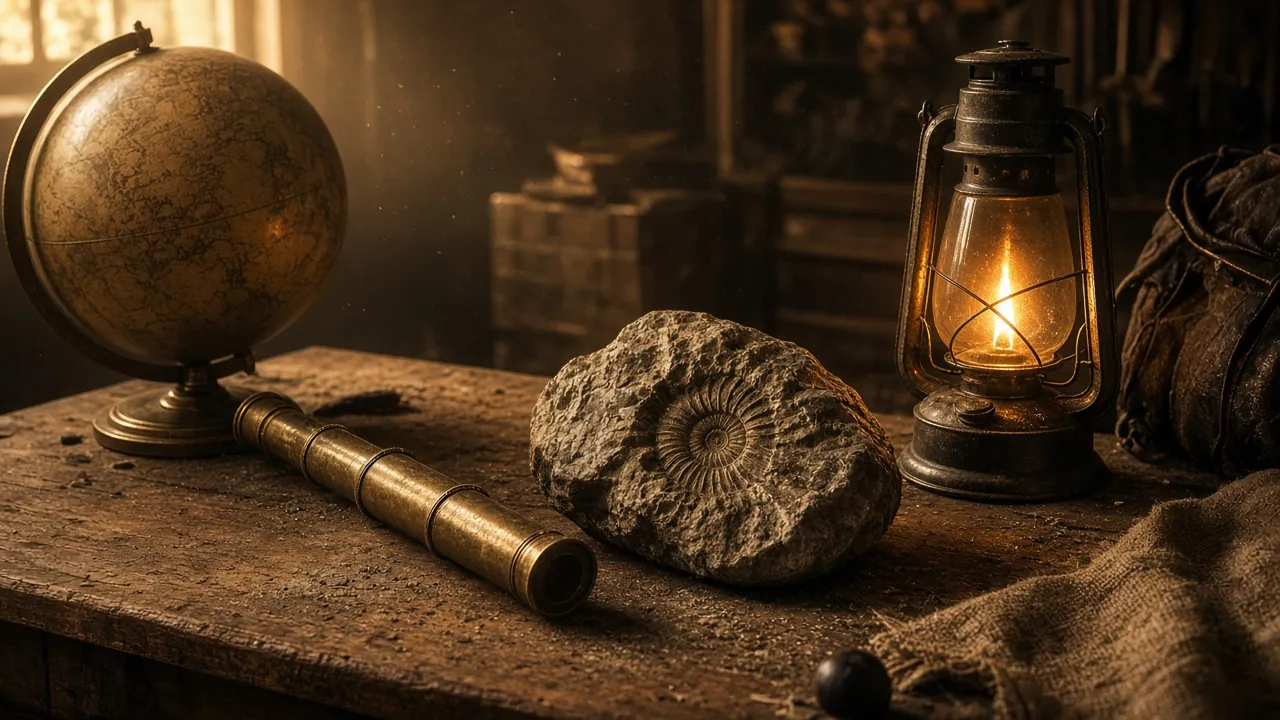
Eight remarkable archaeological finds, from the Antikythera mechanism and Ötzi the Iceman to Richard III under a car park and the Staffordshire Hoard: what was found, how, and what it changed.
Some archaeological discoveries are strange because of what they are; others because of where, or how, they turned up. These eight changed what we know about the past, and several were found by accident.
1. The Antikythera mechanism
In 1901, divers recovering treasures from an ancient shipwreck off the Greek island of Antikythera brought up a lump of corroded bronze. Decades later, X-ray and CT scans revealed dozens of interlocking gears. Dating from roughly the 2nd or 1st century BC, it's an astronomical calculator that could predict the positions of the Sun and Moon, the phases of the Moon and eclipses. Nothing of similar complexity is known for well over a thousand years afterwards.
2. Ötzi the Iceman
In 1991, hikers in the Ötztal Alps on the Austrian-Italian border found a body in melting ice. It turned out to be around 5,300 years old: a naturally mummified man, with clothing, a copper axe and tools. In 2001, scans revealed a stone arrowhead in his shoulder. He was probably killed. Ötzi is now in a museum in Bolzano, Italy.
3. The Terracotta Army
In 1974, farmers digging a well near Xi'an in China found fragments of clay figures. They had uncovered part of the vast burial complex of Qin Shi Huang, China's first emperor, who died in 210 BC. Thousands of life-size soldiers, horses and chariots have been found, each with individual features, and much of the complex remains unexcavated.
4. Sutton Hoo
In 1939, on the eve of the Second World War, a self-taught archaeologist, Basil Brown, excavated a mound on an estate in Suffolk for its owner, Edith Pretty. He found the imprint of a 27-metre ship, with a burial chamber full of treasures, including the famous helmet. It's an early 7th-century Anglo-Saxon royal burial, often linked to King Rædwald of East Anglia, and it transformed views of the so-called Dark Ages. The finds are in the British Museum.
5. Richard III under a car park
In 2012, archaeologists from the University of Leicester, working with the Richard III Society, excavated a council car park on the site of a lost friary. They found a skeleton with a curved spine and battle wounds. In 2013, DNA comparison with living relatives and other evidence confirmed it was Richard III, killed at the Battle of Bosworth in 1485. He was reburied in Leicester Cathedral in 2015.
6. Göbekli Tepe
On a hill in south-eastern Turkey, archaeologists have excavated huge carved stone pillars arranged in circles, dating back to around 9500 BC. They were built by people before farming was established in the region, challenging the idea that monumental building only came after agriculture.
7. Lindow Man
In 1984, workers cutting peat at Lindow Moss in Cheshire found part of a human body. The acidic, waterlogged bog had preserved his skin, hair and even stomach contents. He died around 2,000 years ago, apparently violently, which has led to theories of ritual sacrifice, though this is debated. He's displayed at the British Museum.
8. The Staffordshire Hoard
In 2009, a metal detectorist, Terry Herbert, found gold in a Staffordshire field. It became the largest hoard of Anglo-Saxon gold and silver metalwork ever found, with thousands of fragments, mostly from weapons and war gear. It was declared treasure and acquired by museums in Birmingham and Stoke-on-Trent.
Found something yourself?
In England, Wales and Northern Ireland, finds that may be treasure, such as gold or silver objects over 300 years old, must be reported to the local coroner within 14 days under the Treasure Act 1996. The Portable Antiquities Scheme records other finds. Scotland has its own system.
Sources and further reading
- British Museum: Sutton Hoo
- University of Leicester: Richard III
- South Tyrol Museum of Archaeology: Ötzi
- Portable Antiquities Scheme
- Wikipedia: Antikythera mechanism
Facts checked on 20 October 2026. Spotted an error? Tell us and we will correct it.
Related Articles
Chris is a freelance writer and editor covering a wide range of topics with a focus on accuracy and depth.
Last updated: 2026-04-25 · Fact-checked by editorial team